
The Global Institute for Strategic Studies (GISS)
Over the past three years, one of the least visible yet most strategically significant consequences of the war in Ukraine has unfolded far from the battlefields of Donbas or the diplomatic corridors of Brussels. Instead, it has taken shape across the world’s oceans through the emergence of an increasingly sophisticated network of oil tankers, shell companies, offshore financial structures, and alternative maritime services that collectively have become known as Russia’s “shadow fleet.” While Western sanctions were designed to isolate Moscow economically and reduce its capacity to finance military operations, the rapid expansion of this parallel maritime system has fundamentally challenged long-held assumptions regarding the effectiveness of sanctions in an interconnected global economy.
The shadow fleet is no longer simply a collection of ageing oil tankers operating outside traditional regulatory frameworks. It has evolved into an alternative global logistics network capable of transporting millions of barrels of crude oil each day while minimizing exposure to Western financial institutions, insurance providers, classification societies, and maritime regulators. Through complex ownership structures, frequent flag changes, ship-to-ship transfers, and alternative payment mechanisms, Russia has demonstrated that modern sanctions can be circumvented not only through financial innovation but also through the strategic reorganization of global maritime trade itself.
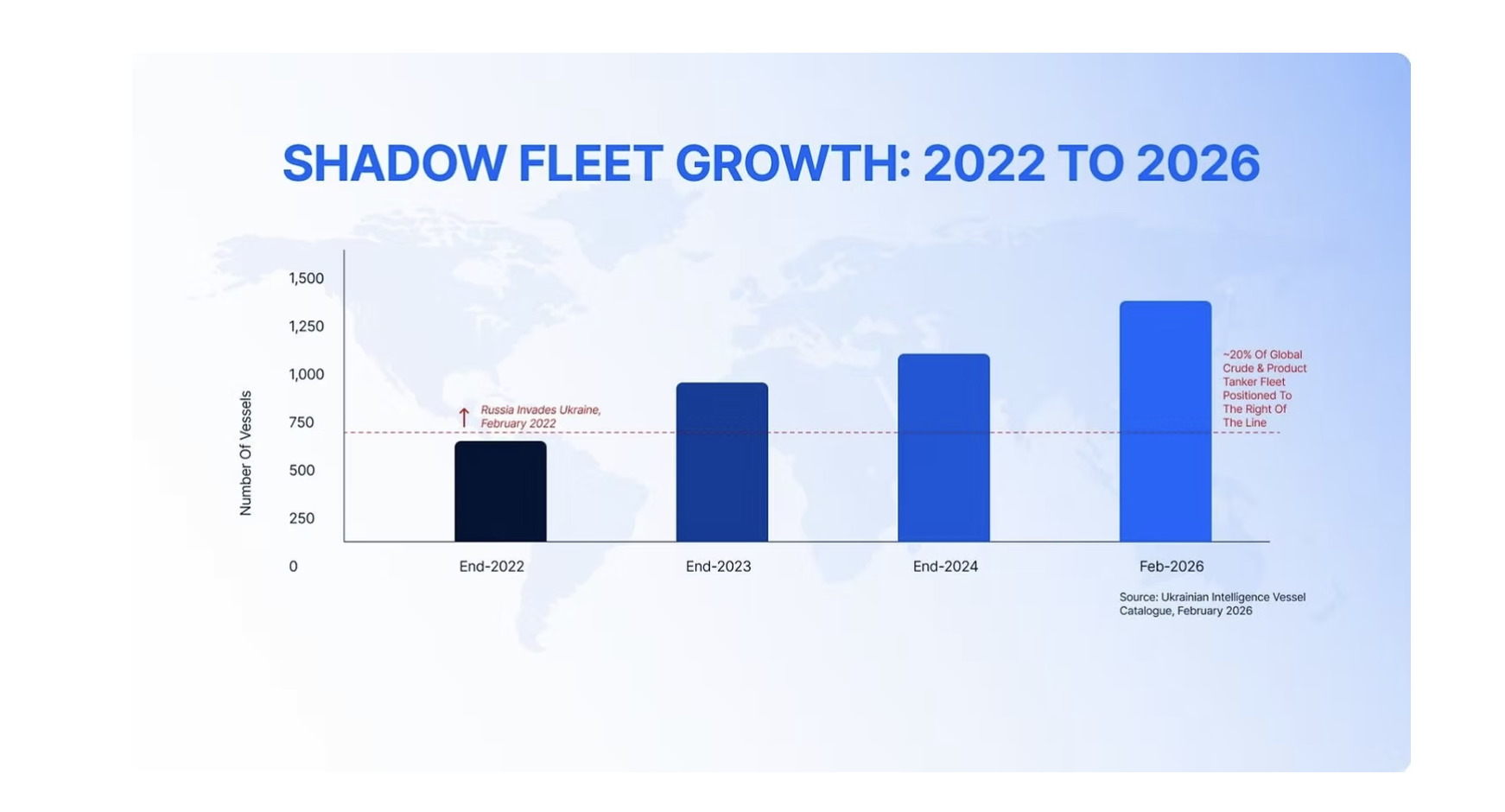
The implications extend far beyond Russia’s energy exports. The growth of the shadow fleet represents a structural transformation in the relationship between geopolitics and international shipping. For decades, the global maritime system operated on the assumption that access to Western insurance markets, banking systems, port services, and legal jurisdictions was indispensable for large-scale international trade. Russia’s response to sanctions has challenged this assumption by gradually constructing a parallel commercial ecosystem capable of operating outside many traditional mechanisms of economic enforcement.
This transformation has profound implications for international security. Maritime trade carries approximately 90 percent of global commerce by volume, making the stability, transparency, and regulation of shipping routes essential to the functioning of the international economy. If major powers increasingly develop alternative maritime systems insulated from Western sanctions and oversight, the global shipping industry may become progressively fragmented into competing regulatory spheres. Such fragmentation would not only complicate sanctions enforcement but could also increase operational risks, weaken environmental oversight, and create new vulnerabilities within critical maritime infrastructure.
The emergence of Russia’s shadow fleet should therefore be understood not merely as an economic adaptation to sanctions but as a broader geopolitical strategy. Rather than confronting Western restrictions directly, Moscow has sought to reduce its structural dependence on the institutions through which those restrictions are enforced. This reflects a wider trend visible across contemporary international politics, in which states facing economic pressure increasingly invest in parallel financial systems, alternative payment mechanisms, regional logistics networks, and non-Western commercial partnerships capable of reducing exposure to traditional centres of global economic governance.
From a strategic perspective, the shadow fleet illustrates an important evolution in economic statecraft. During previous decades, sanctions were often regarded as one of the most effective non-military instruments available to Western governments. Their success depended upon the dominance of Western financial institutions, insurance markets, shipping registries, and legal systems within the global economy. The Russian case demonstrates that while sanctions continue to impose significant economic costs, their effectiveness may gradually decline when targeted states possess sufficient resources, commercial partners, and geopolitical incentives to construct alternative trading networks.
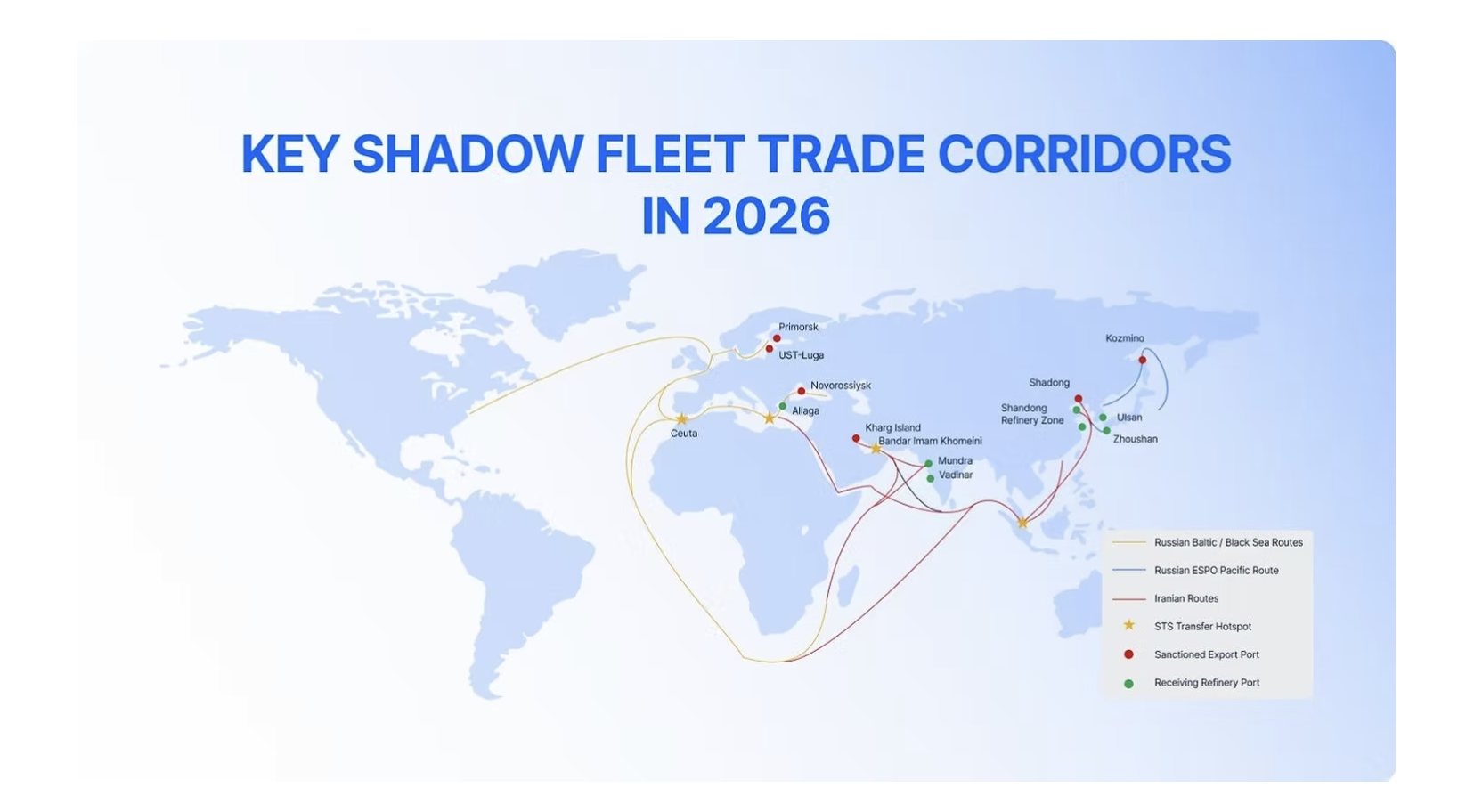
Energy exports remain central to this transformation. Hydrocarbon revenues continue to represent one of the principal sources of income supporting the Russian state. Restricting these revenues became a primary objective of Western sanctions following the invasion of Ukraine. Measures including price caps, import restrictions, financial sanctions, and shipping limitations sought to reduce Moscow’s ability to finance military operations while avoiding major disruptions to global energy markets. However, the simultaneous need to maintain international oil supplies created opportunities for alternative commercial arrangements. Russia increasingly redirected exports toward Asian markets while relying upon an expanding fleet of vessels operating under opaque ownership structures and outside many traditional compliance mechanisms.
The rapid growth of these operations has generated concern among governments, maritime regulators, insurers, and environmental organizations alike. Many vessels associated with the shadow fleet are considerably older than the global average tanker fleet, raising questions regarding maintenance standards, technical inspections, environmental compliance, and accident risks. Several operate under flags of convenience, frequently change ownership, or deactivate automatic identification systems during portions of their voyages, reducing transparency for maritime authorities. These practices complicate not only sanctions enforcement but also emergency response planning, environmental protection, and maritime safety across some of the world’s busiest shipping lanes.
For Europe, the challenge extends well beyond sanctions policy. The expansion of Russia’s shadow fleet increasingly intersects with broader concerns surrounding critical infrastructure protection, maritime domain awareness, hybrid threats, and regional security. European governments have become progressively more attentive to suspicious vessel movements near undersea communication cables, offshore energy infrastructure, and strategic ports. Although direct evidence linking commercial shadow fleet operations to hostile maritime activities varies between individual cases, the convergence of opaque commercial shipping and heightened geopolitical tensions has significantly expanded the strategic importance of maritime surveillance throughout European waters.
The Baltic Sea has emerged as one of the principal theatres in which these concerns converge. Following NATO enlargement and increased military activity across Northern Europe, the region has acquired unprecedented strategic significance. Commercial shipping, energy infrastructure, submarine cables, and naval operations now coexist within an increasingly congested security environment. Any expansion of opaque maritime networks operating with limited regulatory transparency inevitably attracts closer attention from regional governments seeking to strengthen maritime resilience against both conventional and hybrid threats.
Perhaps the most important lesson emerging from Russia’s shadow fleet is that modern geopolitical competition increasingly extends beyond traditional military confrontation. Control over logistics, shipping, insurance, finance, technology, and global supply chains has become an essential component of national power. States are no longer competing solely through armed forces or diplomatic influence but also through their ability to maintain commercial resilience under conditions of sustained economic pressure. In this sense, the shadow fleet represents more than an instrument for transporting oil; it reflects the emergence of a new model of geopolitical adaptation capable of reshaping the future relationship between sanctions, maritime commerce, and international strategic competition.