More than four years after launching its full-scale invasion of Ukraine, Russia is approaching a critical juncture in the relationship between its economy, military ambitions, and political stability. Contrary to repeated predictions of imminent economic collapse, the Russian economy has demonstrated a surprising degree of resilience under sanctions, export restrictions, and international isolation. Yet resilience should not be confused with sustainability. Beneath headline indicators lies a growing structural imbalance that increasingly threatens Moscow’s ability to sustain a prolonged war while preserving domestic stability. Russia today faces a dilemma that is not primarily financial, but political and economic: how to continue expanding military power when the resources required to do so are becoming progressively harder and more expensive to obtain.
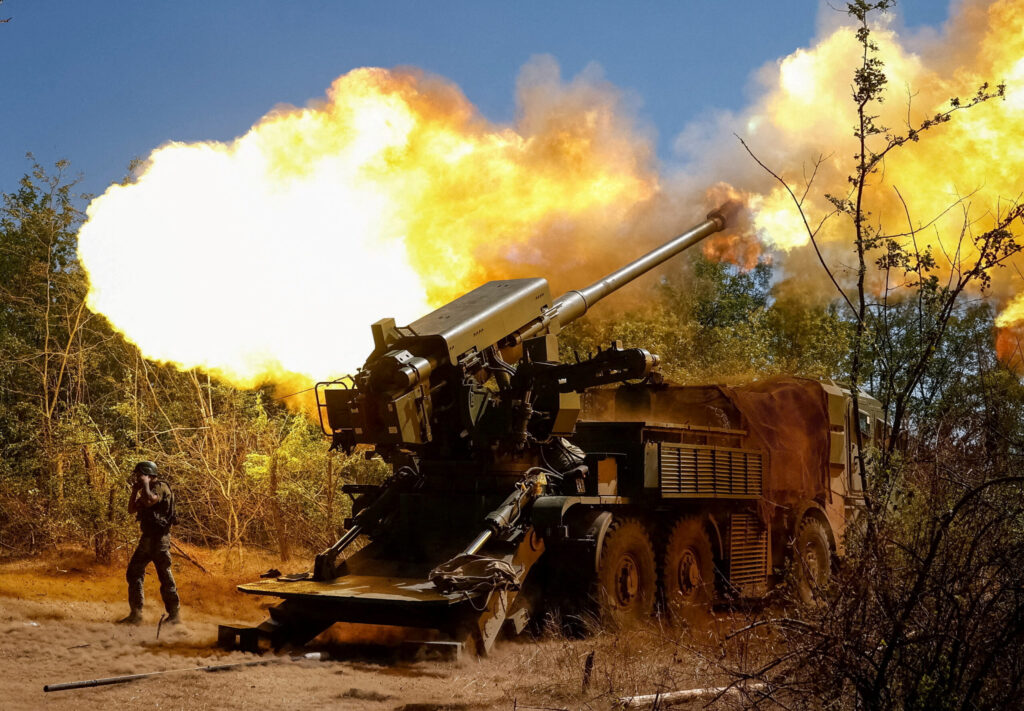
Since 2022, the Kremlin has relied on a hybrid wartime economic model that differs significantly from the Soviet-style mobilization systems of the twentieth century. Rather than imposing widespread compulsory mobilization or placing the entire economy under direct state control, Moscow has attempted to sustain its war effort through a combination of fiscal expansion, military-industrial investment, recruitment incentives, and selective repression. Massive state spending has fueled defense production and maintained economic activity, allowing Russia to avoid the immediate economic shock many observers expected following Western sanctions. However, the very mechanisms that initially supported resilience are now generating new vulnerabilities. Military spending has expanded dramatically, defense factories are operating close to maximum capacity, and inflationary pressures continue to challenge monetary stability. Meanwhile, civilian sectors increasingly struggle under high interest rates, labor shortages, and declining investment.
At the center of Russia’s emerging difficulties lies an increasingly severe manpower crisis. The war has simultaneously increased demand for labor while reducing its availability. Hundreds of thousands of soldiers have been killed or wounded on the battlefield, while significant numbers of educated and skilled workers have left the country since 2022. At the same time, the expansion of military production has created unprecedented demand for industrial workers. This combination of military attrition, emigration, and industrial expansion has produced what many Russian officials now describe as the most serious labor shortage in the country’s modern history. Unlike financial resources, labor cannot be generated rapidly through policy decisions. New factories can be constructed, and governments can increase spending, but workers cannot be created overnight. Russia’s demographic trends further complicate this challenge, as a shrinking working-age population limits the state’s ability to replenish its labor force.
The Kremlin has thus far sought to address military manpower needs through financial incentives rather than compulsory service. Recruitment bonuses, high salaries, and generous compensation packages for soldiers and their families have allowed Moscow to avoid the political risks associated with mass mobilization. This approach reflects a broader strategy of insulating Russian society from the full costs of war while maintaining public support. Yet there are increasing indications that this model is reaching its limits. Recruitment rates appear to be slowing even as battlefield casualties continue to rise. If current trends persist, Russia may soon find itself losing more soldiers than it can replace through voluntary enlistment. Such a development would force the Kremlin to confront one of the most politically sensitive decisions of the war: whether to impose broader compulsory mobilization on a society that has largely been shielded from direct participation in the conflict.
The economic implications of this challenge are equally significant. Russia continues to operate within a largely market-based system in which labor, capital, and production inputs are allocated through financial incentives rather than administrative command. This distinguishes the current Russian model from the Soviet command economy, where the state could directly allocate resources according to political priorities. Today, if the Kremlin wishes to attract workers into military industries or recruit soldiers for the front, it must compete with other sectors by offering increasingly attractive financial incentives. This process drives wage inflation, increases budgetary pressures, and raises the overall cost of sustaining military operations. As a result, military power has become significantly more expensive to generate than it was during the Soviet period, despite the state’s growing intervention in economic life.
Faced with these pressures, Moscow may increasingly turn toward measures that resemble aspects of a command economy. The expansion of state ownership, directed lending programs, industrial planning mechanisms, and administrative control over strategic sectors could represent the next phase of Russia’s wartime transformation. While a complete return to Soviet-style central planning remains unlikely, the logic of prolonged war may push the Kremlin toward greater control over both economic activity and labor allocation. Such a shift would represent the most profound restructuring of Russia’s economic model since the collapse of the Soviet Union and would signal a broader transition from a partially market-based system toward a more centralized wartime economy.
Alongside economic changes, the Kremlin appears to be expanding its capacity for social control. Recent restrictions on internet access, tighter surveillance measures, increased monitoring of digital communications, and the development of state-controlled digital platforms suggest preparations for a more restrictive domestic environment. These policies are not simply directed at limiting foreign influence. Rather, they appear designed to reduce the possibility of domestic mobilization, political organization, and public resistance should the government introduce more coercive wartime measures. Digital authoritarianism is increasingly becoming a central component of Russia’s governance strategy, providing the state with new tools to monitor society while limiting opportunities for collective action.
The long-term political consequences of these developments remain uncertain. Historically, prolonged wars have often generated instability not because of mass popular uprisings but because of divisions among ruling elites. Russia’s own history offers multiple examples, from the collapse of the Tsarist regime during the First World War to the fragmentation of the Soviet Union in 1991. Authoritarian systems frequently appear stable until elite consensus begins to break down. If economic pressures intensify while military objectives remain elusive, tensions may emerge between different pillars of the Russian state, including military leaders, security services, regional authorities, economic elites, and technocratic institutions. In such circumstances, the greatest threat to regime stability may originate from within the system itself rather than from organized public opposition.
For Europe and the broader transatlantic community, these trends carry important strategic implications. Russia’s growing economic constraints do not necessarily imply imminent weakness or defeat. On the contrary, they may encourage the Kremlin to pursue deeper mobilization, increased repression, and greater state intervention in an effort to sustain its military campaign. Policymakers should therefore avoid assuming that economic difficulties alone will force Moscow to alter its strategic objectives. Instead, the more likely scenario is a prolonged period of adaptation in which Russia seeks to balance military requirements, economic pressures, and domestic political stability. The outcome of this balancing act will play a critical role in shaping the future of the war in Ukraine, the stability of the Russian political system, and the broader security environment across Europe.
Ultimately, Russia is entering a decisive phase in its wartime evolution. The model that allowed the Kremlin to wage a major war while avoiding full societal mobilization is becoming increasingly difficult to sustain. Economic constraints, labor shortages, rising recruitment costs, and mounting fiscal pressures are converging to force difficult choices upon Russian leaders. Whether Moscow responds through deeper mobilization, expanded coercion, or strategic retrenchment will determine not only the future trajectory of the war but also the future character of the Russian state itself.