
The Global Institute for Strategic Studies (GISS)
Introduction
The Russian invasion of Ukraine in February 2022 marked one of the most significant geopolitical turning points since the end of the Cold War. Beyond the humanitarian catastrophe and regional instability it produced, the war fundamentally reshaped global military doctrine, defence procurement priorities, alliance structures, and strategic thinking across Europe, Asia, the Middle East, and beyond.
For decades following the collapse of the Soviet Union, many governments reduced defence budgets, downsized conventional forces, and shifted military focus toward counterterrorism, stabilization missions, and asymmetric warfare. The Ukraine war abruptly reversed this trajectory. The return of large-scale conventional warfare in Europe forced governments worldwide to reconsider military readiness, ammunition stockpiles, industrial production capacity, energy security, logistics resilience, and deterrence strategies.
The war demonstrated that conventional interstate conflict remains a central feature of international politics. It also exposed vulnerabilities in modern military systems, including dependence on global supply chains, insufficient munitions production, weak air defence coverage, and the growing role of drones, cyber operations, artificial intelligence, and satellite intelligence.
As a result, the world entered a new phase of accelerated militarization.
Defence spending surged to record levels. NATO expanded. European countries began rebuilding armies they had neglected for decades. Asian powers intensified naval and missile modernization. Middle Eastern states accelerated procurement of missile defence and unmanned systems. Defence industries experienced unprecedented demand, while arms manufacturers struggled to keep pace with orders.
This research examines how the Ukraine war transformed global military spending patterns, altered strategic doctrines, reshaped defence-industrial priorities, and accelerated a new international arms race.
1. The End of the Post-Cold War Security Illusion
Europe’s Strategic Shock
Prior to 2022, many European governments believed that large-scale war on the continent was unlikely. Defence budgets were often politically unpopular, and many armies focused on expeditionary operations in Afghanistan, Iraq, Africa, or peacekeeping missions.
Germany represents perhaps the clearest example of this mindset. For years, Berlin prioritized economic integration and diplomacy over military expansion. The Bundeswehr suffered from severe underinvestment, shortages of ammunition, aging equipment, and limited operational readiness.
The invasion of Ukraine shattered these assumptions.
German Chancellor Olaf Scholz described the war as a “Zeitenwende” — a historic turning point. Germany announced a €100 billion special defence fund and committed to exceeding NATO’s 2% GDP defence spending target.
Other European countries quickly followed:
- Poland launched one of the largest military modernization programs in Europe.
- Finland and Sweden abandoned decades of military non-alignment and moved to join NATO.
- France accelerated modernization of nuclear deterrence and conventional forces.
- The Baltic states increased defence budgets dramatically.
- The United Kingdom expanded investments in missiles, submarines, and cyber capabilities.
The conflict revived the concept of territorial defence.
2. The Explosion in Global Defence Spending
Record Military Expenditures
Global military expenditure reached historic highs after 2022.
According to multiple international defence assessments, worldwide military spending exceeded $2.4 trillion annually by the mid-2020s.
Several factors contributed to this surge:
- Fear of regional instability.
- Concerns over Russian aggression.
- Strategic competition between the United States and China.
- Increased demand for air defence systems.
- Expansion of naval capabilities.
- Massive replenishment of ammunition stocks.
- Drone and missile warfare lessons from Ukraine.
The United States remained the world’s largest military spender, accounting for nearly 40% of global defence expenditure.
China maintained the second-largest military budget and continued rapid modernization across all military domains.
Meanwhile, middle powers such as Poland, South Korea, Saudi Arabia, Turkey, Japan, and Australia significantly expanded defence procurement.
NATO Spending Targets
One of the clearest impacts of the Ukraine war was NATO’s renewed cohesion.
For years, many NATO members failed to meet the alliance’s 2% GDP defence spending benchmark. Following the invasion, governments rapidly increased allocations.
Poland became one of NATO’s highest defence spenders relative to GDP.
Countries near Russia’s borders prioritized:
- Tank acquisitions.
- Long-range artillery.
- Rocket systems.
- Missile defence.
- Ammunition stockpiles.
- Territorial defence units.
The war exposed how quickly modern warfare consumes resources.
3. Ammunition Crisis and Industrial Limitations
The Return of Industrial Warfare
One of the most important lessons from Ukraine was the scale of ammunition consumption.
Modern precision weapons received enormous attention in previous decades, but the Ukraine war demonstrated that artillery shells remain central to high-intensity conflict.
Ukraine and Russia consumed thousands of artillery rounds daily.
Western countries discovered that their industrial bases were not prepared for prolonged industrial warfare.
Stockpiles quickly declined.
Governments realized that many defence industries had shifted toward low-volume, high-tech production models unsuitable for sustained conventional conflict.
As a result:
- The European Union launched initiatives to expand ammunition production.
- The United States invested heavily in shell manufacturing.
- Defence contractors increased production capacity.
- Governments signed long-term procurement agreements.
This marked the return of defence-industrial mobilization on a scale not seen since the Cold War.
4. Drones and the Transformation of Warfare
Ukraine as the World’s Largest Drone Laboratory
The Ukraine war revolutionized perceptions of unmanned systems.
Drones became essential for:
- Surveillance.
- Artillery targeting.
- Precision strikes.
- Naval attacks.
- Psychological warfare.
- Battlefield intelligence.
Commercial drones adapted for combat changed tactical operations.
Low-cost FPV drones capable of destroying armored vehicles demonstrated that relatively inexpensive systems could neutralize costly platforms.
This created a strategic dilemma:
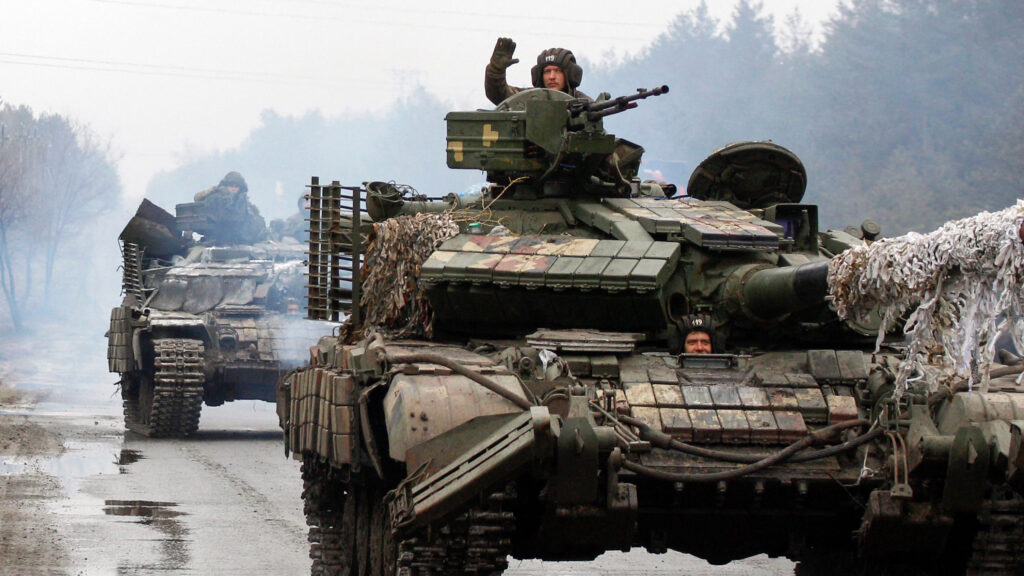
- Tanks costing millions of dollars could be destroyed by drones worth hundreds.
The war accelerated investment in:
- Counter-drone systems.
- Electronic warfare.
- AI-assisted targeting.
- Autonomous systems.
- Loitering munitions.
Countries worldwide began reevaluating procurement priorities.
Turkey’s Bayraktar TB2, Iranian Shahed drones, Israeli unmanned systems, and Chinese drone exports became increasingly influential globally.
5. Air Defence Becomes Central Again
Missile Saturation and Layered Defence
The war highlighted the importance of air defence.
Russia’s use of cruise missiles, ballistic missiles, and drones against Ukrainian infrastructure exposed vulnerabilities in national protection systems.
Air defence became one of the fastest-growing procurement sectors globally.
Demand surged for systems such as:
- Patriot.
- NASAMS.
- IRIS-T.
- THAAD.
- SAMP/T.
- Iron Dome.
Middle Eastern countries also accelerated investments due to regional missile threats.
The challenge was economic as much as military.
Intercepting inexpensive drones with expensive missile systems created sustainability concerns.
Governments began searching for cheaper counter-drone technologies:
- Directed-energy weapons.
- Laser systems.
- Electronic jamming.
- AI-assisted interception.
6. Naval Competition and Maritime Security
Expanding Naval Militarization
Although the Ukraine war is primarily land-based, it intensified maritime competition globally.
Russia’s naval blockade of Ukrainian ports highlighted the strategic importance of sea lanes.
Meanwhile, China accelerated naval modernization in the Indo-Pacific.
Countries increased investment in:
- Submarines.
- Frigates.
- Anti-ship missiles.
- Maritime drones.
- Aircraft carriers.
The AUKUS agreement between Australia, the UK, and the US reflected broader concern over Chinese naval expansion.
Japan expanded defence reforms, while India accelerated maritime modernization in response to growing Chinese activity.
The Red Sea crisis and attacks on shipping routes further reinforced the importance of naval security.
7. Europe Rearms
Poland as a Military Powerhouse
Poland emerged as one of the most militarized countries in Europe after 2022.
Warsaw launched massive acquisitions including:
- Abrams tanks.
- K2 tanks from South Korea.
- HIMARS rocket systems.
- F-35 fighter jets.
- Air defence systems.
Poland’s strategy aimed to create Europe’s strongest land force on NATO’s eastern flank.
Germany’s Rearmament
Germany’s military transformation represented a historic shift.
Berlin expanded procurement of:
- F-35 aircraft.
- Heavy transport helicopters.
- Ammunition reserves.
- Missile defence systems.
However, Germany also faced challenges:
- Slow procurement bureaucracy.
- Industrial bottlenecks.
- Political debates over military leadership.
Scandinavian Militarization
Finland and Sweden’s NATO accession dramatically altered European security architecture.
Nordic countries strengthened:
- Arctic defence.
- Air forces.
- Submarine fleets.
- Territorial defence systems.
8. The US-China Strategic Competition
Beyond Ukraine
Although Ukraine dominated headlines, many defence planners viewed the conflict through the lens of future competition with China.
The United States increasingly shifted military planning toward the Indo-Pacific.
Key priorities included:
- Naval superiority.
- Long-range precision strike.
- Supply chain resilience.
- Semiconductor security.
- Artificial intelligence.
- Cyber warfare.
China expanded:
- Aircraft carrier programs.
- Missile forces.
- Space capabilities.
- Amphibious assault capacity.
- Hypersonic weapons.
Taiwan became central to global strategic calculations.
The fear of simultaneous crises involving Russia and China reshaped US defence planning.
9. The Defence Industry Boom
Profits and Production Challenges
Defence contractors experienced major growth following the war.
Companies involved in:
- Ammunition.
- Missile production.
- Drones.
- Radar systems.
- Cybersecurity.
- Satellite intelligence.
saw increasing demand.
However, the industry faced major constraints:
- Shortages of skilled labour.
- Supply chain disruptions.
- Dependence on rare materials.
- Limited manufacturing capacity.
Governments began discussing “war economy” production models.
This raised broader questions:
- Can democratic societies sustain long-term industrial mobilization?
- How resilient are Western defence supply chains?
- What happens if another major conflict erupts simultaneously?
10. The Return of Conscription and Reserve Forces
Rethinking National Preparedness
Several countries reconsidered military service after the invasion.
The war showed that manpower still matters in large-scale conflict.
Countries such as:
- Sweden.
- Lithuania.
- Latvia.
- Poland.
expanded reserve systems or debated forms of national service.
Governments also emphasized:
- Civil defence.
- Infrastructure resilience.
- Cyber preparedness.
- Energy security.
National resilience became a strategic priority.
11. The Middle East and the New Arms Race
Regional Military Expansion
Middle Eastern states intensified procurement after observing lessons from Ukraine.
Saudi Arabia and the UAE expanded:
- Air defence systems.
- Drone capabilities.
- Naval security assets.
Iran accelerated missile and drone development.
Israel focused on:
- Multi-layered missile defence.
- AI-enabled military systems.
- Counter-drone technologies.
Turkey expanded its defence industry influence globally through drone exports and indigenous weapons development.
The region increasingly became both a buyer and producer of advanced military systems.
12. Strategic Lessons from Ukraine
What the War Changed
The Ukraine conflict overturned many assumptions about modern warfare.
Key lessons include:
1. Conventional war remains central.
Large armies, artillery, trenches, and logistics remain decisive.
2. Industrial capacity matters.
Wars consume enormous quantities of ammunition and equipment.
3. Drones changed battlefield economics.
Cheap systems can destroy expensive assets.
4. Air defence is critical.
Civilian infrastructure is vulnerable without layered defence.
5. Alliances matter.
Ukraine’s survival depended heavily on Western support.
6. Information warfare is central.
Cyber operations, propaganda, and satellite intelligence became integrated into military operations.
13. Risks of a New Global Arms Race
Escalation and Instability
The rapid militarization occurring worldwide raises major concerns.
Arms races historically increase:
- Miscalculation risks.
- Regional tensions.
- Economic burdens.
- Proxy conflicts.
As countries prioritize military spending, concerns emerge regarding:
- Social spending reductions.
- Debt pressures.
- Political polarization.
At the same time, technological acceleration increases unpredictability.
AI-enabled warfare, autonomous weapons, cyber conflict, and space militarization may destabilize deterrence frameworks.
The international system increasingly resembles a fragmented multipolar security environment.
Conclusion
The Ukraine war did more than reshape European security.
It accelerated a global transformation in military doctrine, defence spending, industrial production, and strategic competition.
The post-Cold War assumption that economic interdependence could prevent large-scale interstate war has weakened dramatically.
Governments across the world are now preparing for prolonged geopolitical confrontation.
This new era is characterized by:
- Expanding military budgets.
- Rapid technological militarization.
- Rearmament of conventional forces.
- Intensified alliance competition.
- Growth of defence industries.
- Renewed focus on territorial defence.
The consequences of this transformation will likely define global security for decades.
Whether this emerging arms race produces deterrence and stability — or deeper instability and confrontation — remains one of the defining geopolitical questions of the 21st century.