The Global Institute for Strategic Studies (GISS)
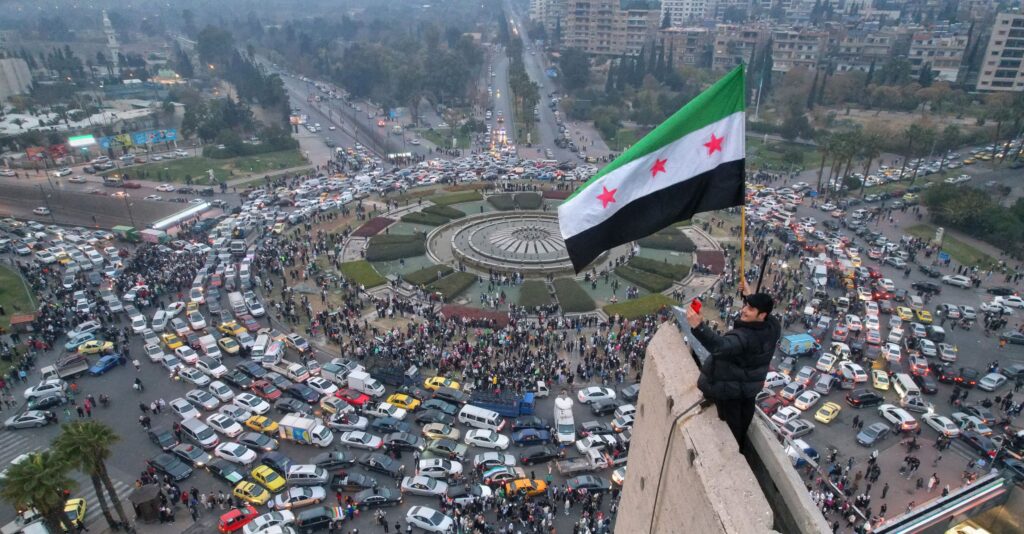
The fall of Bashar al-Assad marked one of the most significant political transformations in the modern history of the Middle East. After more than a decade of devastating war, mass displacement, economic collapse, international intervention, and widespread destruction, Syria entered a new and uncertain transitional phase that is already reshaping regional politics and geopolitical alignments.
The collapse of the Assad regime did not simply represent the downfall of a long-standing authoritarian government. It also disrupted an entire regional security architecture that had been deeply interconnected with Iranian influence, Russian military strategy, transnational militia networks, organized crime structures, and regional power balances.
Today, Syria stands at the center of a broader geopolitical struggle involving regional powers, international actors, armed factions, economic interests, reconstruction efforts, and competing visions for the country’s future political order. The post-Assad landscape raises urgent questions regarding state reconstruction, transitional justice, security sector reform, refugee return, foreign military influence, and the future of regional stability.
At the same time, Syria’s transition reflects wider transformations occurring across the Middle East itself. The region is increasingly moving toward a fragmented multipolar order in which regional powers such as Turkey, Iran, Saudi Arabia, Qatar, Israel, and the United Arab Emirates pursue competing strategic interests while global actors like the United States, Russia, and China seek to preserve or expand their influence.
The future of Syria may therefore become one of the defining geopolitical battlegrounds shaping the Middle East during the coming decade.
The Collapse of the Assad State Structure
The fall of the Assad regime exposed the extent to which Syria’s state institutions had become deeply intertwined with security networks, patronage systems, war economies, and foreign-backed militias.
For decades, the Syrian state relied heavily on centralized authoritarian control, intelligence agencies, military dominance, and political repression. During the civil war, these structures increasingly merged with networks involved in organized crime, sanctions evasion, narcotics production, militia financing, and external military support.
As state authority weakened during the conflict, many areas of governance became fragmented among local armed groups, foreign forces, tribal actors, and economic intermediaries. The collapse of the regime therefore did not create a simple political vacuum, but rather revealed a highly fragmented security and administrative landscape.
One of the greatest challenges facing post-Assad Syria is rebuilding state institutions capable of functioning independently from militia networks and war economy structures.
Transitional Justice and Accountability
One of the central questions shaping Syria’s future involves accountability for war crimes, enforced disappearances, torture, chemical attacks, and large-scale human rights violations committed during the conflict.
For many Syrians, transitional justice is viewed as essential for any sustainable political transition. Families of detainees, victims of torture, displaced communities, and survivors of state violence continue demanding truth, accountability, and institutional reform.
However, implementing transitional justice in Syria remains extremely complex. The scale of violations, the destruction of institutions, the involvement of multiple armed actors, and geopolitical divisions all complicate accountability efforts.
International mechanisms, investigative organizations, Syrian civil society groups, and investigative journalists continue documenting evidence related to war crimes and corruption networks linked to the former regime and allied actors.
The future legitimacy of any transitional political order may depend significantly on whether accountability mechanisms are perceived as credible, inclusive, and independent.
Reconstruction and the Political Economy of Syria
Syria’s reconstruction represents one of the largest economic and political challenges in the region.
After years of war, vast parts of the country’s infrastructure remain destroyed, including housing, hospitals, schools, transportation networks, energy systems, and water infrastructure. Estimates for reconstruction costs reach hundreds of billions of dollars.
Yet reconstruction is not simply a technical or economic process. It is also deeply political.
Questions surrounding who finances reconstruction, who controls contracts, which communities receive support, and how property rights are managed will shape Syria’s future social and political order.
There are growing concerns that reconstruction could become dominated by oligarchic networks, foreign interests, and politically connected business actors seeking to benefit economically from post-war rebuilding.
Property disputes also represent a major issue. Millions of displaced Syrians face uncertainty regarding housing, land ownership, and legal documentation after years of displacement and demographic changes caused by the conflict.
The reconstruction process may therefore become a central arena of both political competition and social tension.
Iran and the Future of Regional Influence
The fall of Assad significantly affected Iran’s regional strategy.
For years, Syria represented a critical component of Iran’s regional influence network linking Tehran to Hezbollah in Lebanon and allied militias across Iraq and the broader Middle East. Iranian military advisors, Revolutionary Guard units, and proxy militias played a major role in sustaining the Assad regime during the war.
The weakening or collapse of the Assad-centered system therefore threatens Iran’s strategic depth in the Levant.
However, Iran continues maintaining influence through militia networks, economic partnerships, religious institutions, and political relationships built over years of involvement in Syria.
The future of Iranian influence will likely depend on the structure of Syria’s transitional government, regional normalization efforts, and the balance between competing foreign actors inside the country.
At the same time, Israel continues viewing Iranian entrenchment in Syria as a major security threat, making Syria a potential arena for continued regional confrontation.
Russia’s Position After Assad
Russia’s military intervention in Syria beginning in 2015 played a decisive role in preserving the Assad regime during the civil war.
Through airpower, military advisors, and diplomatic support, Moscow secured strategic military bases and expanded its influence in the Eastern Mediterranean. Syria became a central component of Russia’s broader Middle East strategy.
The post-Assad transition, however, introduces uncertainty regarding the future of Russian influence.
Russia seeks to preserve access to military facilities, maintain political influence, and protect economic interests despite changing realities on the ground. Yet Moscow’s ability to shape Syria’s future may be constrained by its ongoing war in Ukraine, economic pressures, and competition from regional actors.
Syria remains strategically important for Russia, but its influence may become more contested than during the Assad era.
Turkey and Northern Syria
Turkey has emerged as one of the most influential external actors shaping Syria’s future.
Ankara’s priorities include border security, preventing the expansion of Kurdish armed groups linked to the PKK, managing refugee dynamics, and expanding regional influence.
Turkey maintains military presence and political influence across parts of northern Syria through local governance structures, security partnerships, and economic integration.
The future of northern Syria remains one of the most sensitive issues within the broader transition process. Questions surrounding Kurdish autonomy, refugee return, local governance, and security arrangements will significantly influence Turkish policy.
Ankara increasingly seeks a stable but strategically favorable political order in Syria that limits both Kurdish separatism and Iranian influence.
Organized Crime and the Captagon Economy
One of the most significant legacies of the Syrian conflict is the expansion of organized crime networks tied to narcotics production and smuggling.
Syria became a major center for Captagon production during the later years of the war, with trafficking networks extending across the Middle East, Europe, and North Africa. Elements linked to the former regime, militias, businessmen, and transnational criminal groups reportedly played central roles within this economy.
The Captagon trade generated billions of dollars and became deeply integrated into wartime economic survival mechanisms.
Dismantling these networks represents a major challenge for any future Syrian government. Organized crime structures developed during the conflict are now transnational, heavily armed, and financially entrenched.
The future of Syria’s transition will partly depend on whether authorities can dismantle war economy networks and restore formal economic governance.
Refugees and the Question of Return
The Syrian conflict produced one of the largest refugee crises in modern history.
Millions of Syrians remain displaced across Turkey, Lebanon, Jordan, Europe, and other regions. The question of refugee return is therefore central to Syria’s future stability and reconstruction.
However, return remains highly complicated by security concerns, destroyed infrastructure, property disputes, lack of economic opportunities, and fears of retaliation.
Many refugees also lost legal documents or property rights during the conflict. Others face uncertainty regarding political conditions and institutional reforms.
The pace and sustainability of refugee return will significantly shape Syria’s demographic, economic, and political future.
The Gulf States and Economic Competition
Gulf countries increasingly view Syria’s reconstruction as both a geopolitical and economic opportunity.
Saudi Arabia, Qatar, and the UAE are all positioning themselves to influence Syria’s future through diplomacy, investments, humanitarian assistance, and political engagement.
At the same time, these states seek to limit Iranian influence and expand their own regional leverage.
Economic involvement in Syria may therefore become closely connected to broader regional competition over influence, reconstruction contracts, infrastructure projects, and political alliances.
Syria and the Emerging Middle Eastern Order
The Syrian transition reflects broader transformations occurring throughout the Middle East.
The region is moving away from rigid alliance structures toward a more flexible and fragmented geopolitical environment. Regional powers increasingly pursue pragmatic, interest-based relationships shaped by economic competition, technological development, energy transitions, and security concerns.
At the same time, non-state actors, militias, and transnational networks continue playing major roles in regional politics.
Syria remains both a symbol and a testing ground for this evolving regional order.
Conclusion
The fall of Bashar al-Assad marked the beginning of a new and highly uncertain chapter in Middle Eastern politics.
Syria’s future will be shaped by complex interactions between transitional justice, reconstruction, regional competition, organized crime, refugee return, and foreign influence. The country remains deeply fragmented after years of war, while competing powers continue seeking strategic advantage within its political transition.
At the same time, Syria’s transformation reflects broader regional shifts toward multipolarity, economic competition, and evolving security dynamics.
The success or failure of Syria’s transition will have consequences extending far beyond its borders. It may influence regional stability, refugee flows, organized crime networks, geopolitical alignments, and the future balance of power across the Middle East.
Syria is no longer only a post-conflict state struggling to rebuild. It has become a central arena in the redefinition of the Middle East itself.