
The Global Institute for Strategic Studies (GISS)
Energy has always been one of the central pillars shaping global politics, economic power, military influence, and international alliances. From the industrial revolution to the oil shocks of the twentieth century, control over energy resources has repeatedly transformed the balance of power between nations.
Today, the global energy system is entering one of the most significant periods of transition in modern history. Climate change, geopolitical rivalries, technological innovation, wars, sanctions, and the rise of renewable energy are reshaping how countries produce, consume, and compete over energy resources.
The world is no longer moving within a simple framework dominated entirely by oil and gas. Instead, a complex energy landscape is emerging in which fossil fuels, renewable technologies, critical minerals, nuclear energy, and energy security concerns coexist simultaneously.
At the same time, geopolitical tensions surrounding energy have intensified. Russia’s war in Ukraine, tensions in the Middle East, competition between the United States and China, instability in global shipping routes, and the race for clean energy dominance are all redefining global energy politics.
The future of energy will therefore not only determine economic development and environmental sustainability, but also the future structure of international power itself.
The Historical Role of Oil in Global Power
For more than a century, oil has been one of the most strategic resources in the international system.
The discovery of massive oil reserves in the Middle East transformed the region into a geopolitical center of global importance. Countries possessing large energy reserves gained significant economic and political influence, while industrial powers became increasingly dependent on secure access to fossil fuels.
Oil shaped military alliances, foreign interventions, global trade systems, and international diplomacy throughout the twentieth century.
The United States emerged as a dominant global power partly through its energy production capacity and control over international maritime trade routes. Meanwhile, Gulf countries used oil wealth to build regional influence, sovereign wealth funds, and strategic partnerships across the world.
Energy security became deeply integrated into national security strategies for major powers.
Natural Gas and the New Energy Geopolitics
Natural gas has become increasingly important within the global energy system.
Compared to coal and oil, natural gas produces lower carbon emissions, making it a transitional fuel in many countries attempting to reduce emissions while maintaining industrial and economic growth.
Russia, Qatar, the United States, Iran, and several other countries possess some of the world’s largest natural gas reserves. This has intensified geopolitical competition surrounding pipelines, liquefied natural gas (LNG) infrastructure, maritime routes, and regional energy partnerships.
Europe’s dependence on Russian gas became a major geopolitical vulnerability exposed dramatically after Russia’s invasion of Ukraine.
The resulting energy crisis accelerated Europe’s search for alternative suppliers and renewable energy investments.
At the same time, Qatar emerged as one of the world’s most influential LNG exporters, while the United States expanded rapidly as a global energy supplier through shale gas production.
Natural gas now occupies a central position in global geopolitical competition.
The Renewable Energy Revolution
Renewable energy technologies are transforming the global energy landscape at unprecedented speed.
Solar power, wind energy, battery storage, hydrogen technologies, and electric vehicles are increasingly reshaping energy markets and industrial strategies worldwide.
Falling production costs have made renewable energy more economically competitive than ever before.
Many governments now view renewable energy not only as an environmental necessity but also as a strategic economic opportunity capable of creating jobs, technological leadership, and energy independence.
Countries investing heavily in renewable infrastructure seek to position themselves as leaders in future global industries.
At the same time, the transition toward clean energy introduces new geopolitical dynamics involving critical minerals, technology supply chains, and industrial competition.
China and the Global Clean Energy Race
China has become the dominant global actor in many clean energy sectors.
Beijing currently leads large portions of global solar panel manufacturing, battery production, electric vehicle supply chains, and rare earth mineral processing.
China’s massive investments in renewable technologies are closely linked to long-term geopolitical strategy.
Control over clean technology supply chains provides economic influence, industrial leverage, and strategic advantages within the global energy transition.
Western governments increasingly fear dependence on Chinese technology infrastructure and critical mineral supply chains.
This concern has intensified geopolitical competition surrounding industrial policy, semiconductor manufacturing, rare earth extraction, and clean energy technologies.
The energy transition is therefore becoming deeply intertwined with strategic rivalry between China and the West.
The United States and Energy Transformation
The United States occupies a unique position within the global energy transition.
On one hand, the U.S. remains one of the world’s largest producers of oil and natural gas due to the shale revolution. On the other hand, it is also investing heavily in renewable energy technologies, electric vehicles, and green industrial policies.
American energy strategy increasingly combines traditional fossil fuel dominance with long-term technological competition in clean energy industries.
Legislation supporting green manufacturing, battery production, and renewable infrastructure reflects growing recognition that energy transition is also a geopolitical competition.
At the same time, domestic political divisions continue shaping debates over climate policy, fossil fuel production, and environmental regulation.
The Middle East After Oil Dominance
The Middle East remains one of the most energy-rich regions in the world, but the global transition toward renewables creates major long-term uncertainties for oil-exporting states.
Countries such as Saudi Arabia, the UAE, and Qatar increasingly pursue economic diversification strategies aimed at reducing dependence on hydrocarbon revenues.
Saudi Arabia’s Vision 2030, large-scale infrastructure projects, and investments in technology and tourism reflect attempts to prepare for a post-oil future.
However, many oil-dependent economies still face significant structural challenges, including unemployment, economic inequality, governance pressures, and reliance on state spending.
The energy transition may therefore reshape political and economic power structures throughout the region during the coming decades.
Russia, Energy, and Geopolitical Leverage
Russia has long used energy exports as a major instrument of geopolitical influence.
Oil and gas revenues remain central to the Russian economy and state power.
European dependence on Russian energy previously provided Moscow with significant strategic leverage. However, sanctions and the Ukraine war disrupted these relationships dramatically.
Russia increasingly seeks alternative energy partnerships with China, India, and non-Western markets.
At the same time, global efforts to reduce fossil fuel dependence may create long-term economic risks for resource-dependent states such as Russia.
The future of Russian geopolitical influence is therefore closely connected to global energy transitions.
Energy Security and Global Conflict
Energy security remains one of the primary concerns shaping global foreign policy and military strategy.
Wars, sanctions, maritime tensions, pipeline disputes, and attacks on energy infrastructure can rapidly destabilize global markets.
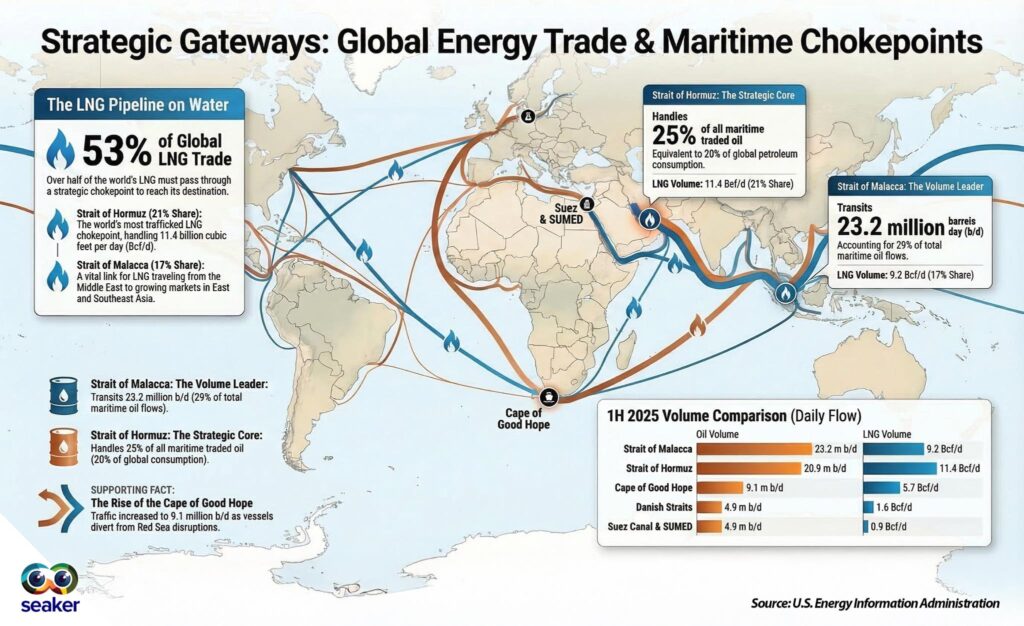
Strategic chokepoints such as the Strait of Hormuz, the Suez Canal, and the South China Sea remain critical to global energy transportation.
Conflicts in the Middle East continue affecting oil prices and international economic stability.
Cyberattacks targeting energy infrastructure also represent growing security threats.
Governments increasingly prioritize diversification of energy sources, domestic production capacity, and resilient supply chains to reduce vulnerability to geopolitical disruptions.
Critical Minerals and the New Resource Competition
The renewable energy transition depends heavily on critical minerals including lithium, cobalt, nickel, copper, and rare earth elements.
These materials are essential for batteries, solar panels, wind turbines, semiconductors, and electric vehicles.
As global demand increases, competition over mineral extraction, processing, and supply chains is intensifying.
Countries possessing major reserves of critical minerals may gain significant geopolitical importance in the coming decades.
At the same time, concerns surrounding labor exploitation, environmental destruction, and strategic dependence are growing.
The competition for critical minerals increasingly resembles earlier geopolitical struggles over oil.
Nuclear Energy and the Energy Transition
Nuclear energy is reemerging as part of global energy debates.
Supporters argue nuclear power provides stable low-carbon electricity generation capable of supporting climate goals and energy security.
Several countries are investing in new nuclear technologies, including small modular reactors and next-generation nuclear systems.
However, concerns regarding safety, radioactive waste, costs, and proliferation risks continue limiting broader expansion.
The future role of nuclear energy remains politically contested but strategically significant.
Climate Change and Energy Policy
Climate change is fundamentally transforming energy policy worldwide.
Governments face increasing pressure to reduce greenhouse gas emissions while maintaining economic growth and energy stability.
The challenge involves balancing environmental goals with political realities, industrial competitiveness, and social impacts.
Rapid energy transitions may create economic disruptions in regions heavily dependent on fossil fuel industries.
At the same time, failure to transition effectively could intensify climate-related disasters, environmental instability, and global inequality.
Energy policy is therefore becoming inseparable from climate security and economic strategy.
Technology, Innovation, and the Future of Energy
Technological innovation will likely shape the future energy system more than any single political decision.
Advances in battery storage, hydrogen fuel, carbon capture, fusion energy, smart grids, and artificial intelligence may dramatically transform energy production and consumption patterns.
Countries leading energy innovation may gain enormous strategic and economic advantages.
The future energy landscape may become increasingly decentralized, digitalized, and interconnected.
At the same time, technological competition may intensify geopolitical rivalries over intellectual property, supply chains, and industrial dominance.
Conclusion
The global energy system is undergoing a historic transformation.
Oil and gas remain central to global economics and geopolitics, but renewable technologies, climate pressures, and technological innovation are rapidly reshaping the future of energy.
The transition toward cleaner energy systems is creating new forms of geopolitical competition involving critical minerals, industrial supply chains, energy infrastructure, and technological leadership.
At the same time, traditional energy conflicts involving oil, gas, maritime routes, and resource control remain deeply relevant.
The future global order may increasingly depend on which countries successfully adapt to this evolving energy landscape.
Energy will continue shaping international power, economic development, military strategy, and geopolitical stability throughout the twenty-first century — but the nature of that power is changing faster than at any time in modern history.