The Global Institute for Strategic Studies (GISS)
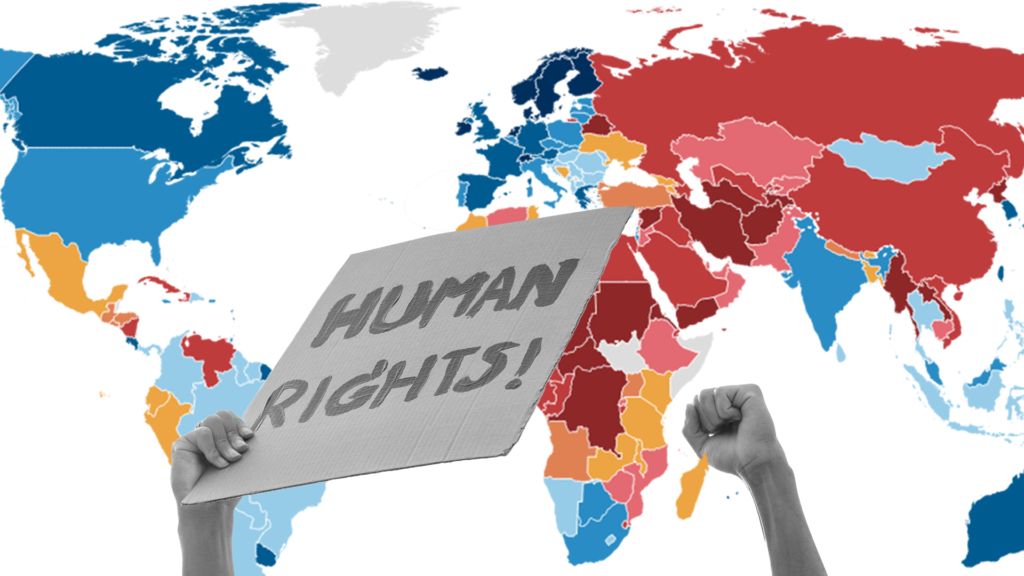
Democracy is facing one of the most significant global crises since the end of the Cold War. Across multiple regions of the world, democratic institutions are experiencing growing pressure from authoritarian movements, populist leaders, political polarization, disinformation campaigns, declining trust in institutions, economic inequality, and expanding surveillance technologies.
For decades after the collapse of the Soviet Union, many analysts believed liberal democracy had emerged as the dominant and inevitable model of governance. Democratic expansion during the 1990s appeared to confirm the global triumph of political pluralism, free elections, independent media, and constitutional governance.
However, the twenty-first century has revealed a far more fragile reality.
Today, democratic backsliding is occurring in both developing and advanced democracies. Elected leaders increasingly weaken judicial independence, attack journalists, manipulate constitutions, undermine electoral systems, and centralize executive power while maintaining formal democratic structures.
At the same time, authoritarian governments are becoming more technologically sophisticated and internationally influential. Digital surveillance, online propaganda, algorithmic manipulation, and state-controlled information systems are enabling new forms of political control that differ significantly from traditional authoritarian models.
The crisis of democracy is therefore not limited to individual countries. It reflects a broader transformation in global politics, governance, technology, and public trust.
The future of democracy may become one of the defining political struggles of the twenty-first century.
The Rise of Democratic Backsliding
Democratic decline rarely occurs through sudden military coups alone. Increasingly, it emerges gradually through institutional erosion carried out by elected governments themselves.
This process, often described as democratic backsliding, involves the weakening of democratic norms and institutions while preserving the appearance of electoral legitimacy.
Leaders may attack independent media, weaken courts, manipulate election laws, restrict civil society organizations, politicize security institutions, and centralize authority within the executive branch.
Unlike traditional dictatorships, modern authoritarian tendencies often operate within formally democratic systems.
Countries experiencing democratic erosion frequently continue holding elections, maintaining parliaments, and preserving constitutional language while gradually undermining institutional independence and political pluralism.
This gradual transformation makes democratic decline more difficult to recognize and confront.
Populism and Political Polarization
One of the major drivers of democratic instability has been the global rise of populist politics.
Populist leaders often present themselves as defenders of “the people” against corrupt political elites, traditional institutions, international organizations, or minority groups.
While populism itself is not inherently anti-democratic, many populist movements weaken democratic norms by portraying political opponents, journalists, judges, and civil society organizations as enemies of the nation.
Political polarization has intensified significantly in many democracies. Social divisions based on ideology, identity, religion, ethnicity, migration, and economic inequality increasingly shape political competition.
In highly polarized societies, democratic compromise becomes more difficult, and public trust in institutions declines.
Polarization also creates fertile conditions for conspiracy theories, disinformation campaigns, and extremist political movements.
Social Media, Disinformation, and Digital Politics
The digital revolution has fundamentally transformed democratic politics.
Social media platforms have expanded access to information and political participation, but they have also accelerated disinformation, online extremism, political manipulation, and societal polarization.
Algorithms designed to maximize engagement often amplify emotionally charged, divisive, or misleading content. False information can spread rapidly across digital networks before fact-checking mechanisms respond.
State actors, political groups, and private organizations increasingly use coordinated online campaigns, bots, deepfakes, and algorithmic targeting to influence public opinion and electoral outcomes.
Foreign interference in elections through digital platforms has become a major concern for democratic governments.
The information environment itself is becoming increasingly fragmented and difficult to regulate.
As a result, democracies face growing challenges in preserving informed public debate and trust in shared facts.
Economic Inequality and Democratic Fragility
Economic inequality represents another major factor contributing to democratic instability.
In many countries, large segments of the population feel economically marginalized despite globalization and technological growth.
Rising housing costs, stagnant wages, precarious employment, declining social mobility, and widening wealth disparities have weakened confidence in political and economic systems.
Many citizens increasingly perceive democratic institutions as serving wealthy elites rather than broader public interests.
Economic frustration often fuels support for anti-establishment political movements, populist leaders, and extremist ideologies.
At the same time, concentrated economic power can influence politics through lobbying, media ownership, campaign financing, and regulatory capture.
The relationship between capitalism and democracy is therefore becoming increasingly contested in many societies.
Authoritarianism in the Digital Age
Modern authoritarianism differs significantly from twentieth-century dictatorship models.
Today’s authoritarian governments increasingly rely on digital surveillance, artificial intelligence, facial recognition systems, internet control, and data-driven social monitoring rather than solely relying on overt repression.
China represents one of the most advanced examples of technologically enabled authoritarian governance. The Chinese state integrates mass surveillance systems, digital censorship, biometric monitoring, and algorithmic control into political governance structures.
Other governments increasingly adopt similar technologies to monitor dissent, suppress opposition, and manage information environments.
Digital authoritarianism enables governments to exert extensive social control while maintaining economic modernization and technological development.
This model challenges earlier assumptions that economic growth and technological advancement would automatically promote democratization.
The Decline of Trust in Institutions
Trust in democratic institutions has declined significantly across many countries.
Public confidence in governments, political parties, media organizations, courts, and electoral systems has weakened due to corruption scandals, political polarization, misinformation, and perceived institutional failures.
The COVID-19 pandemic further intensified debates regarding state authority, public trust, individual freedoms, and misinformation.
When citizens lose confidence in institutions, democratic systems become more vulnerable to instability, conspiracy theories, and anti-democratic movements.
Restoring institutional trust may become one of the greatest challenges facing democracies in the coming decades.
Press Freedom and Attacks on Journalism
Independent journalism plays a critical role in democratic accountability. However, press freedom faces growing threats worldwide.
Journalists increasingly face surveillance, legal harassment, censorship, imprisonment, online intimidation, and violence.
Authoritarian governments often portray independent media as foreign agents, enemies of the state, or sources of national instability.
At the same time, economic pressures have weakened traditional media institutions, particularly local journalism.
Disinformation ecosystems and algorithm-driven media environments further complicate the role of independent reporting.
The weakening of journalism undermines democratic oversight and public access to reliable information.
In many countries, attacks on press freedom serve as early indicators of broader democratic decline.
Democracy and Nationalism
Nationalist politics have resurged globally during the past decade.
Many political movements increasingly emphasize sovereignty, border control, cultural identity, and resistance to globalization.
In some contexts, nationalism strengthens democratic participation and social cohesion. However, exclusionary nationalism may also undermine minority rights, international cooperation, and democratic pluralism.
Migration crises, terrorism fears, economic uncertainty, and geopolitical tensions have intensified nationalist politics across Europe, Asia, and the Americas.
Nationalist rhetoric often intersects with anti-globalization sentiment and skepticism toward international institutions.
The balance between national sovereignty and democratic openness remains one of the central political tensions of modern democracies.
Geopolitical Competition and Democratic Decline
The global democratic crisis also intersects with broader geopolitical competition.
Authoritarian powers increasingly promote governance models emphasizing stability, centralized authority, and state control over liberal democratic norms.
China and Russia frequently criticize Western democracy as unstable, polarized, and hypocritical while presenting their own systems as more effective alternatives.
At the same time, democratic countries themselves face internal crises that weaken their global credibility.
The global struggle between democratic and authoritarian models increasingly shapes international relations, technological competition, media influence, and ideological narratives.
Civil Society and Democratic Resistance
Despite democratic decline in many regions, civil society movements continue playing essential roles in defending democratic values.
Journalists, human rights organizations, student movements, anti-corruption activists, labor organizations, and grassroots campaigns remain central actors resisting authoritarianism.
Mass protest movements in various countries demonstrate that public demands for accountability, transparency, and political participation remain strong.
Digital tools also provide new opportunities for mobilization, documentation, and international solidarity.
The resilience of democracy may depend heavily on the strength of independent civil society institutions capable of resisting authoritarian pressures.
Artificial Intelligence and the Future of Democracy
Artificial intelligence may profoundly reshape democratic governance in the coming decades.
AI systems increasingly influence political communication, public opinion, surveillance, electoral campaigning, and information ecosystems.
While AI can improve governance efficiency and public services, it also creates major risks involving manipulation, deepfakes, mass surveillance, and automated propaganda.
Governments and technology companies increasingly possess enormous influence over digital public spaces.
The future relationship between democracy and technology remains uncertain and may become one of the defining political issues of the century.
The Future of Democratic Governance
Democracy is unlikely to disappear globally, but its future form may change significantly.
Some democracies may successfully adapt through institutional reforms, stronger accountability systems, digital regulation, anti-corruption measures, and renewed civic participation.
Others may continue drifting toward hybrid systems combining elections with increasing authoritarian control.
The future of democracy will likely depend on the ability of societies to address economic inequality, rebuild institutional trust, regulate digital technologies, and defend political pluralism.
Democratic resilience may increasingly require active civic engagement rather than assumptions of institutional permanence.
Conclusion
The world is experiencing a profound crisis of democratic governance.
Political polarization, authoritarianism, digital manipulation, economic inequality, declining institutional trust, and technological transformation are reshaping democratic systems across the globe.
At the same time, authoritarian models are becoming more technologically advanced and internationally influential.
The struggle between democratic accountability and centralized political control may define global politics during the twenty-first century.
Yet despite these challenges, democratic values continue inspiring social movements, journalists, civil society organizations, and citizens demanding transparency, freedom, and political participation.
The future of democracy remains uncertain, but its survival will likely depend on the ability of societies to adapt institutions, protect freedoms, and rebuild public trust in an increasingly complex and polarized world.