
The Global Institute for Strategic Studies (GISS)
The world is entering a new era of military expansion and strategic competition marked by rising defence budgets, rapid technological innovation, and intensifying geopolitical tensions. After decades in which many governments reduced military spending following the Cold War, global defence expenditure has once again reached historic levels. Major powers and regional actors alike are investing heavily in advanced weapons systems, missile programs, cyber capabilities, artificial intelligence, drones, naval expansion, and nuclear modernization.
This renewed arms race reflects a broader transformation in the international system. Growing rivalry between the United States, China, and Russia, combined with regional conflicts in Europe, the Middle East, Africa, and Asia, has accelerated military modernization worldwide. Governments increasingly view military strength not only as a tool of defence, but also as a central instrument of geopolitical influence and deterrence.
Unlike previous arms races dominated by conventional military hardware and nuclear weapons alone, the current competition extends into multiple domains simultaneously. Artificial intelligence, autonomous systems, cyber warfare, hypersonic missiles, space militarization, and electronic warfare are reshaping the future battlefield.
At the same time, this militarization raises serious concerns regarding global stability, arms control, economic pressure, and the increasing risk of regional escalation. The world is witnessing the emergence of a highly interconnected but increasingly unstable security environment.
The Return of Large-Scale Military Spending
Global military expenditure has increased dramatically over the past decade. According to international defence assessments, worldwide defence spending now exceeds levels seen during the final years of the Cold War.
Several factors contributed to this trend. Russia’s invasion of Ukraine triggered massive increases in military budgets across Europe. NATO members accelerated rearmament programs and expanded defence procurement after years of relative military stagnation.
Meanwhile, the strategic rivalry between the United States and China intensified military investments across the Indo-Pacific region. Countries including Japan, South Korea, Australia, India, and Taiwan expanded defence spending in response to growing regional tensions.
In the Middle East, ongoing instability, regional rivalries, and concerns regarding Iran’s military influence continued driving major arms purchases by Gulf states, Israel, and Turkey.
This global rearmament trend reflects widespread perceptions that the international security environment is becoming more dangerous and unpredictable.
The United States and Military Superiority
The United States remains the world’s largest military spender by a substantial margin. Washington continues investing heavily in next-generation military technologies designed to maintain strategic superiority across multiple domains.
American defence priorities increasingly focus on competition with China rather than counterterrorism operations. This shift includes investments in naval modernization, long-range missile systems, stealth aircraft, space capabilities, artificial intelligence, cyber warfare, and advanced semiconductor technologies.
The Pentagon also prioritizes the development of joint operational concepts integrating air, land, sea, cyber, and space operations into highly interconnected military systems.
However, maintaining global military dominance has become increasingly expensive. Supporting allies in Europe, maintaining deterrence in the Indo-Pacific, and modernizing nuclear forces simultaneously create enormous financial and logistical pressures.
The United States therefore faces the challenge of sustaining military superiority in an era of intensifying strategic competition and rapidly advancing technologies.
China’s Military Expansion
China’s military modernization represents one of the most significant strategic developments of the 21st century.
Over the past two decades, Beijing transformed the People’s Liberation Army (PLA) into a far more technologically advanced and globally capable military force. China rapidly expanded its navy, developed hypersonic missile systems, increased cyber warfare capabilities, modernized air forces, and invested heavily in artificial intelligence and autonomous systems.
China’s naval expansion is particularly significant. The country now possesses the world’s largest navy by number of vessels, reflecting Beijing’s ambitions to project power throughout the Indo-Pacific and protect strategic trade routes.
Taiwan remains central to Chinese military planning. Beijing continues preparing for potential scenarios involving reunification by force while simultaneously seeking to deter U.S. military intervention.
China’s military growth increasingly challenges the balance of power in Asia and shapes global strategic calculations.
Russia and Strategic Militarization
Despite economic difficulties and international sanctions, Russia continues prioritizing military power as a core element of national strategy.
The war in Ukraine exposed weaknesses within Russia’s conventional military structure, including logistical problems, equipment losses, and command failures. However, Moscow also demonstrated its willingness to sustain prolonged warfare and adapt military production under wartime conditions.
Russia accelerated domestic weapons manufacturing while deepening military cooperation with Iran and North Korea. The conflict also increased Russia’s reliance on drones, electronic warfare, missile systems, and asymmetric military tactics.
Importantly, Russia maintains one of the world’s largest nuclear arsenals, ensuring that nuclear deterrence remains central to global security calculations.
The Ukraine war effectively re-militarized Europe and revived large-scale territorial warfare as a central concern within international politics.
Hypersonic Weapons and the New Missile Race
One of the most important developments in modern military competition is the race to develop hypersonic weapons.
Hypersonic missiles travel at speeds exceeding Mach 5 while maintaining maneuverability, making them significantly more difficult to intercept using traditional missile defence systems.
The United States, China, and Russia are all investing heavily in hypersonic technologies. Russia already deployed systems such as the Kinzhal missile, while China conducted multiple hypersonic tests demonstrating advanced capabilities.
These weapons have the potential to undermine existing strategic stability by reducing warning times and complicating defence planning.
Hypersonic weapons may significantly alter future deterrence dynamics, particularly among nuclear powers.
Nuclear Modernization and Strategic Deterrence
Despite decades of arms control efforts, nuclear weapons remain central to international security.
Major nuclear powers are modernizing their arsenals rather than reducing them. The United States, Russia, and China are all upgrading delivery systems, warheads, submarines, and strategic bombers.
China’s nuclear expansion has become a growing concern for Western governments. Beijing is rapidly increasing the size of its nuclear arsenal while constructing new missile silos and expanding strategic capabilities.
Meanwhile, tensions involving North Korea continue to raise concerns regarding nuclear proliferation and regional instability.
The erosion of arms control agreements has further increased uncertainty. Several Cold War-era treaties collapsed or weakened during recent years, reducing transparency and increasing mistrust between major powers.
As strategic rivalry intensifies, the risk of renewed nuclear competition continues growing.
Drones and Autonomous Warfare
Unmanned systems have become central to modern military competition.
The wars in Ukraine, Gaza, Libya, and the Red Sea demonstrated how drones can reshape battlefield dynamics by providing low-cost precision strike capabilities.
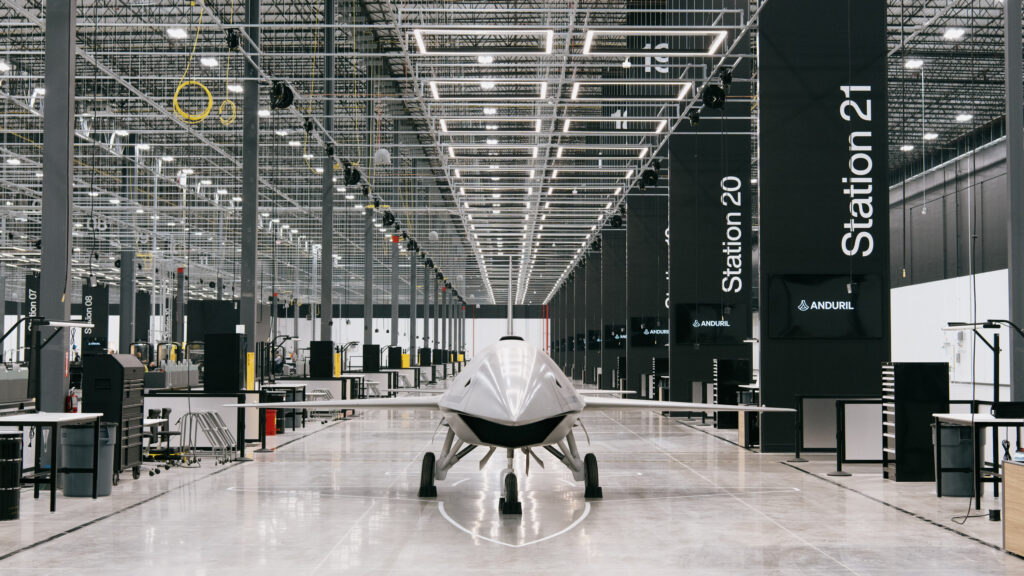
Countries increasingly invest in autonomous drones, loitering munitions, robotic ground systems, and AI-enhanced targeting technologies. These systems reduce operational costs while expanding surveillance and strike capacities.
Turkey, Iran, China, Israel, and the United States emerged as major drone producers influencing regional conflicts through exports and technological partnerships.
Drone warfare is also changing military economics. Cheap drones can destroy expensive tanks, ships, and infrastructure, forcing militaries to rethink traditional force structures and defence strategies.
Space Militarization
Outer space is increasingly becoming a domain of military competition.
Modern armed forces depend heavily on satellites for navigation, communications, intelligence gathering, surveillance, and missile guidance. As a result, countries are investing heavily in anti-satellite weapons and military space infrastructure.
The United States established the U.S. Space Force, while China and Russia expanded military space programs focused on satellite defence and offensive capabilities.
Future conflicts may involve direct attacks against orbital infrastructure, potentially disrupting global communications, financial systems, and military operations simultaneously.
The militarization of space introduces new risks into global security competition while remaining largely unregulated internationally.
The Defence Industry and the Economics of War
The modern arms race is also reshaping global defence industries.
Defence companies are experiencing significant growth as governments expand procurement programs for missiles, fighter jets, drones, naval systems, cybersecurity technologies, and AI-driven defence platforms.
The Ukraine war particularly accelerated demand for ammunition, artillery systems, missile defence technologies, and drone production. Governments increasingly seek to rebuild military stockpiles while reducing dependence on foreign suppliers.
At the same time, military-industrial competition is becoming closely connected to technological innovation, semiconductor production, and supply chain security.
The defence sector is therefore becoming a critical component of broader geopolitical competition.
Regional Arms Races
Beyond major powers, regional arms races are intensifying in several parts of the world.
In the Middle East, Saudi Arabia, Iran, Turkey, Israel, and the UAE continue investing heavily in advanced weapons systems, missile programs, drones, and cyber capabilities.
In Asia, tensions involving China, Taiwan, India, Japan, and North Korea drive rapid military modernization.
In Africa, growing instability and external influence have increased arms imports and military spending in several conflict-prone regions.
These regional dynamics contribute to a broader global environment of militarization and strategic uncertainty.
The Risks of Escalation
The accelerating global arms race creates serious risks for international stability.
As military technologies become faster, more autonomous, and more interconnected, the risk of miscalculation increases. Artificial intelligence, cyber warfare, hypersonic missiles, and autonomous weapons may reduce decision-making time during crises, increasing escalation dangers.
At the same time, the weakening of international arms control mechanisms reduces transparency and trust among rival powers.
Economic pressures also represent a concern. Sustained military expansion places enormous financial burdens on governments, particularly during periods of economic instability and inflation.
The challenge facing the international system is balancing deterrence and security competition without triggering uncontrolled escalation.
Conclusion
The world is witnessing the return of a large-scale global arms race shaped by geopolitical rivalry, technological transformation, and growing international instability.
Unlike previous eras, modern military competition extends across conventional weapons, cyber warfare, artificial intelligence, drones, hypersonic missiles, and space systems simultaneously. Military power is increasingly defined by technological adaptability and integrated capabilities rather than traditional force size alone.
While governments view military modernization as essential for national security, the accelerating pace of global militarization also increases the risks of conflict, escalation, and strategic instability.
The future international order may depend not only on military strength itself, but on whether global powers can manage competition responsibly in an increasingly volatile and technologically complex world.